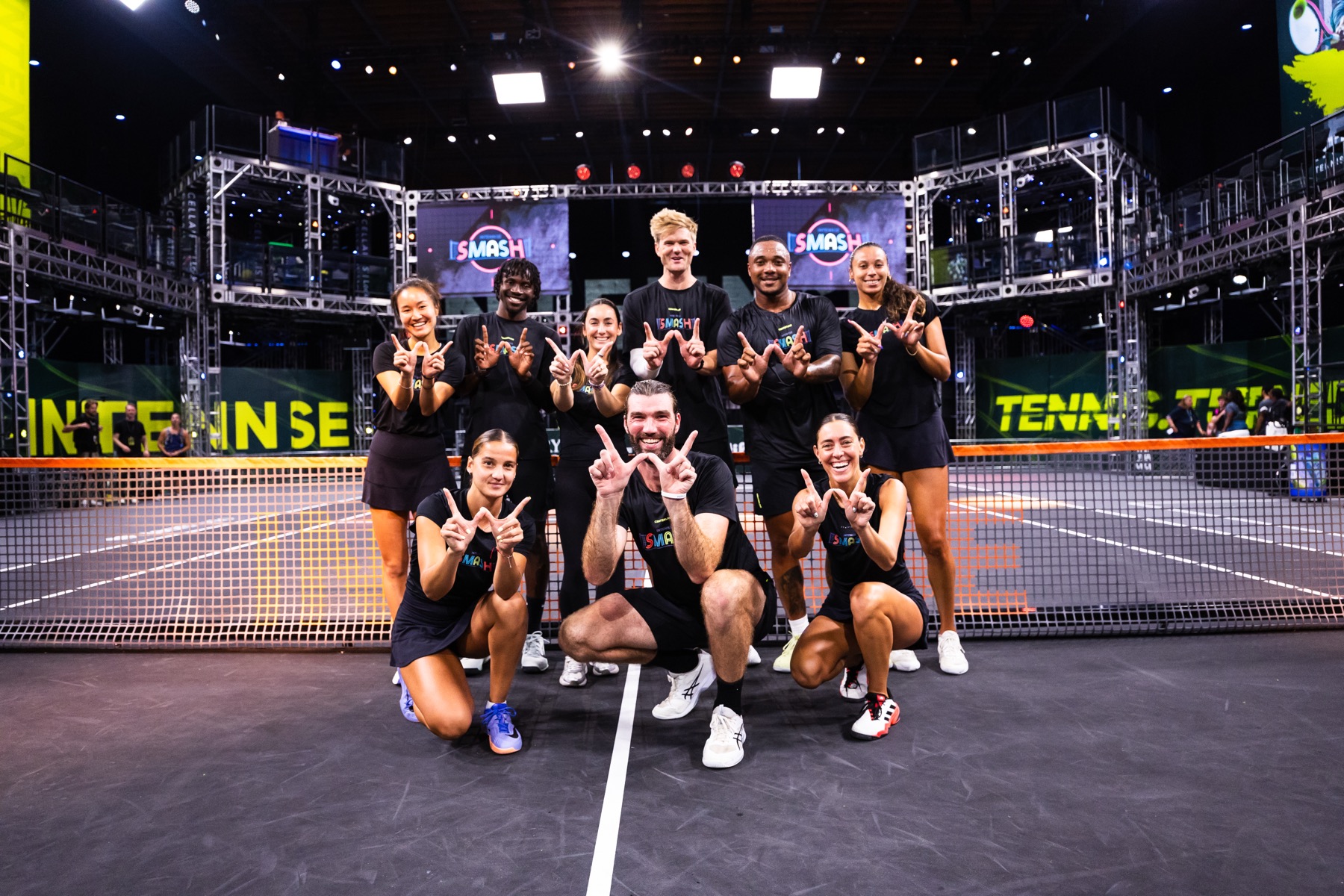
Team ownership · The standing reference · October 2026
Own the home team.
INTENNSE is a professional team tennis league: three women and three men to a side, one score, eight weeks every summer. In 2028 every team moves to a home market of its own, run by its own owners. This page is what a charter is, what an owner holds, and what the first full season proved — written before we know which city you are in.
Team Sales Teaser · Ten sections, about seven minutes
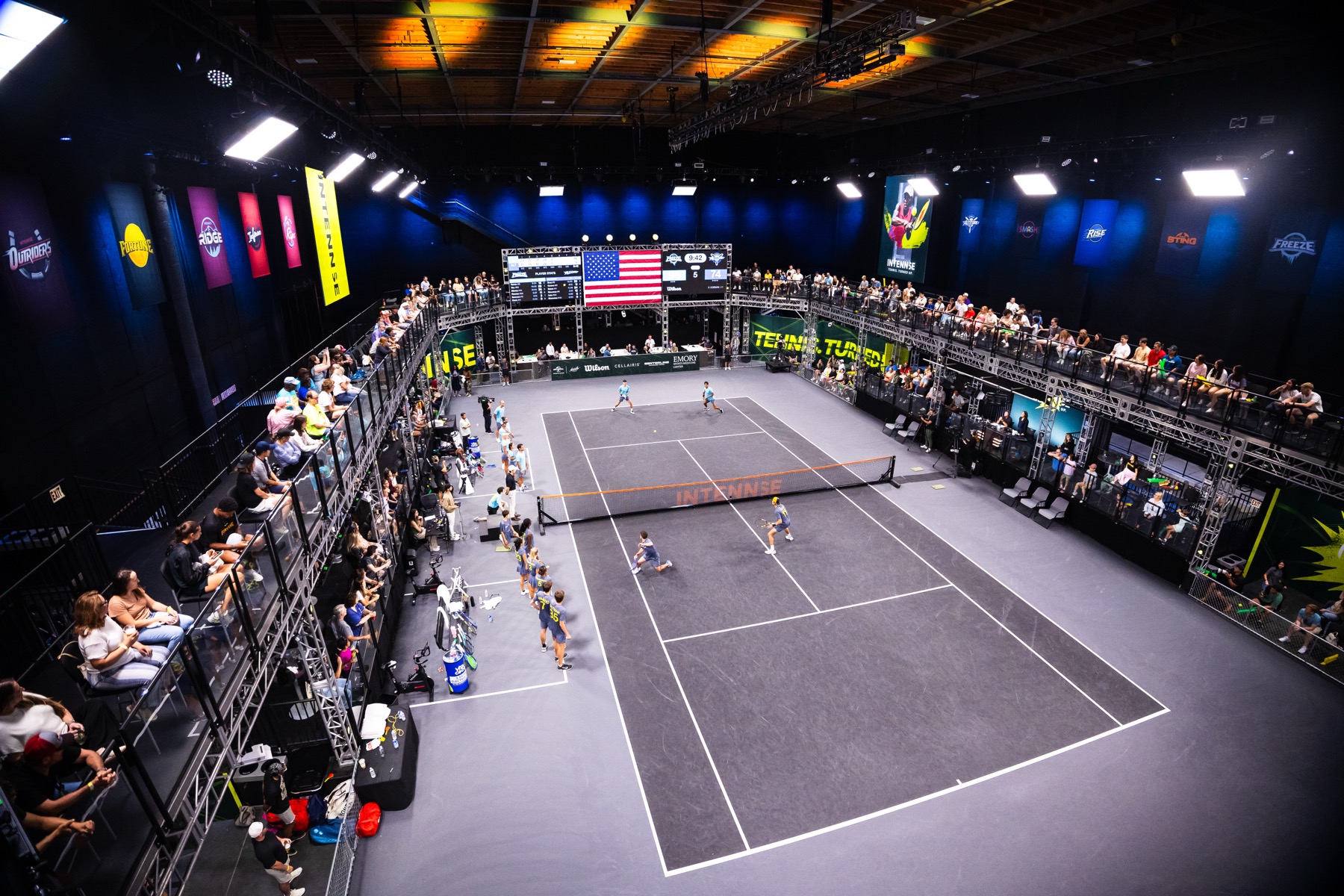
In the stands at INTENNSE Arena · Season 2
A gender-balanced Professional Team Tennis League
Eight playing weeks in the middle of the summer. Switch the view to see the same season against the American sports year, or against the college calendar our players come from.
Where our players have been on the tour, and where they sit on the rating that covers everyone. The orange rule is where tennis starts paying for itself.
UTR: our players against the tour’s
Down to the wire; Sudden Death
Two Arcs that finished a point apart. Each clip picks up in the closing minutes, with the full Arc a click away.
Sudden death, level at 142
The final three minutes of Freeze v Rise, 20 June. The clock runs out with the teams tied, and the next point decides it: 143–142.
Match Center ↗One point, one minute left
The final minute of Outriders v Inferno, 25 June. It finishes 150–149, with the winner’s cheque on court.
Match Center ↗Two points that flipped the score
One from the net, one from the low camera. Each is about twenty seconds, and each one changed the scoreboard.
Low angle, the final Bolt
The last play of the Bolt from the low camera: a two-pointer that takes the Sting from 86–87 to 88–87. 22 seconds.
Match Center ↗Mixed doubles, last seconds
Dalayna Hewitt’s two-pointer in the closing seconds against Rise, 15 July — 156 to 158, level. 18 seconds.
Match Center ↗■ The league









A league that already plays. The owners are the part still open.
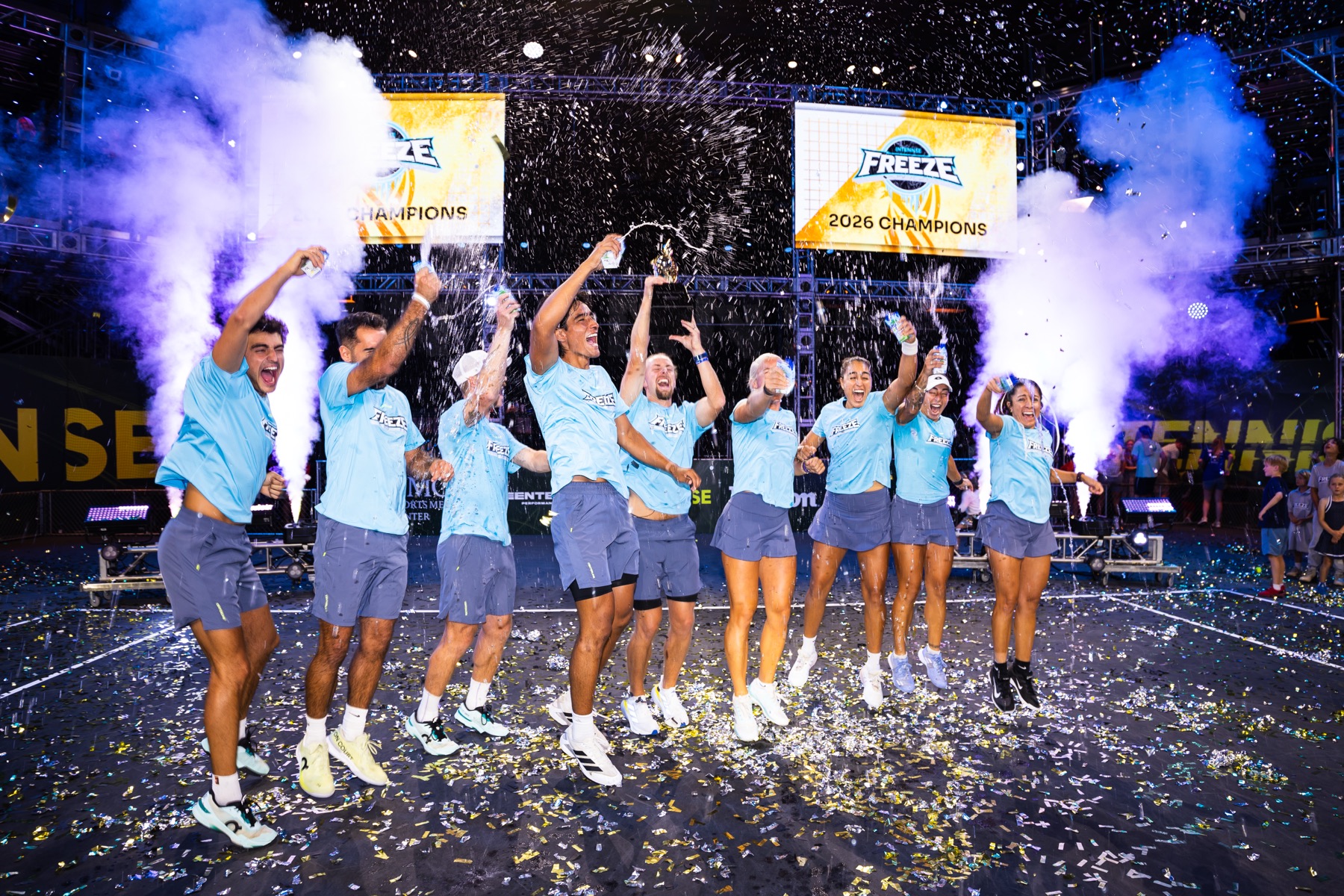
Ten teams, eight weeks, fifty-four Arcs, forty-three of them Pro Arcs, all of it staged in one metro for now. Season 2 closed on 1 August with Freeze beating Outriders 137–130 in front of a full house. Eight of the ten teams take the court in 2027, and every one of them goes home in 2028.
How an INTENNSE match works
Each match, which we call an Arc, is time-boxed: it starts and finishes when the schedule says it will. Singles and doubles count equally toward one team score, a serve clock and a single-ball rule keep it moving, and the result is decided by points banked across the whole night rather than by who wins the last set. A point won by a woman counts exactly the same as a point won by a man.
It was built to be watched in the room and on a screen, which is the thing tennis has never been designed for.
The Rules of INTENNSE, explained · 2:04
Average across forty airings on Peachtree; the best single Arc drew 116,000.
Record live concurrents across the final series.
Two broadcast, two RSNs, seven FAST, three streaming — 60% of watch time on TV.
■ The market
A sport everyone plays, and no city has ever owned.
Tennis in America has tournaments that visit and a tour that passes through. It has never had a team that stays: a roster the city drafted, a season on the city’s calendar, a crest on the city’s kids. Every other major sport sells exactly that. The charter is the right to sell it in tennis.
Where the players come from
The tour pays for itself at around ranking 150, by a peer-reviewed 2026 estimate that counts the cost of a coach. Below that line sit more than a thousand ranked professionals, and behind them the 5,207 players in NCAA Division I. All but two of the forty-seven drafted players on our 2026 rosters with a career high had never reached it.
That is not a weakness of the league. It is the market the league was built for: players of professional standard whom tennis, as it is organised today, does not pay. The chart in the bar at the top of this page shows where each of them sits against the tour.
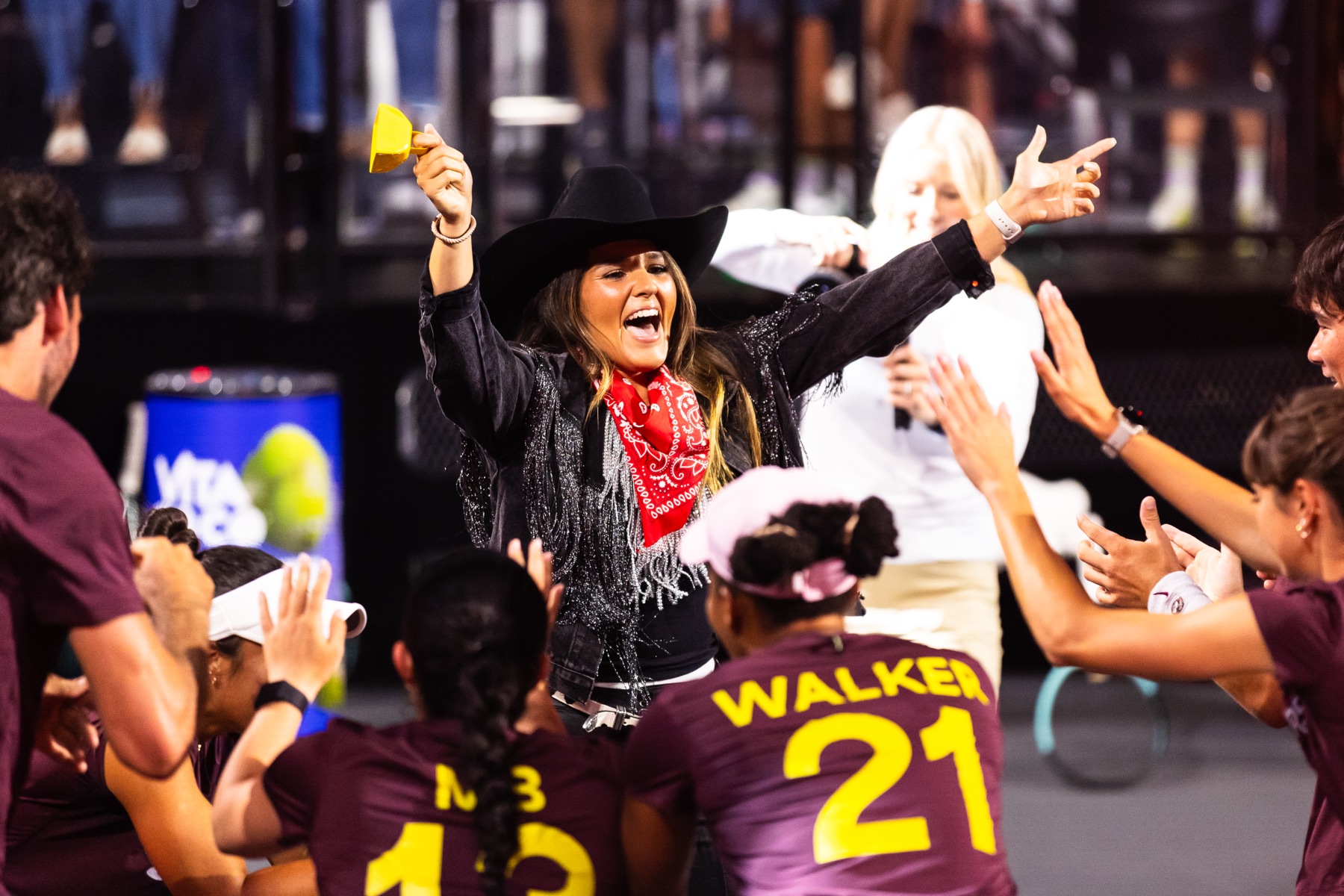
144 of them women, up 748% on the year before. The first open draft in professional tennis.
Across 541 programmes. The college championships end in May; our season opens in June.
Ahead of golf on the US Census Bureau’s table of 35 activities by household income. The data year is 2009, which we say because nobody else does.
The largest tennis-based community organisation in the world, and the home market where the playbook is being written.
■ What an owner holds
A ten-year charter for your territory.
Owners hold an exclusive Team Charter: MLS-style, geographically bound economic rights, not a traditional franchise. Ten years, renewing in five-year terms, across a defined metro. What that buys falls into four parts.
Exclusive territory
The only INTENNSE team in the market, with the team marks and every local right that goes with them.
Local operating control
Ticketing, hospitality, local sponsorship, staffing, venue and community programmes: yours to run, inside league rules.
A share of the league
A share of pooled league revenue, and from 2029 a share of the fees from every charter sold after the initial offering.
The venue
An Arc needs one court, a clock and a crowd close to it; our arena in Atlanta is 30,000 square feet. Where the team plays, and what is built around it, is decided with you.
The league keeps
- Game
- Format, rules, schedule, officiating
- Brand
- League marks and national sponsorship
- Rights
- Media and data rights
The owner holds
- Team
- Operations and team marks in the territory
- Revenue
- Local sponsorship, ticketing, hospitality, activations
- Content
- Local content within league rules
- Share
- Team merchandise, and a share of pooled league revenue
How the economics are built
The owner keeps the large majority of the revenue the team earns locally. Separately, a share of league revenue is pooled and distributed across the teams, so an owner participates in the league’s growth as well as the team’s. From 2029, owners also share in expansion fees as the league adds cities: a home market for every team by 2028, and a market we believe will carry thirty or more teams by 2035.
It is a franchise-value investment first, and the operating model takes several seasons to turn cash-positive. We’ll walk you through that model, line by line, in the room rather than on a page.
■ From league-run to owner-run
Two seasons inside the business before you run it.
Nobody arrives in a new city with a blank page. 2027 is the season where every tool an owner will need is built and run in Atlanta, by people who have run it themselves: the match night, the junior league, the club partnership, the community event.
What 2027 builds
Every team plays two Arcs a week, every week of the season: 65 Pro Arcs against 43 in 2026. Rosters return to three women and three men, so every player is on court more often and every one of them matters to the result. Pay equity is unchanged: women and men earn the same, as they have since day one.
The off-season is already on court, with INTENNSE competition on college campuses and at clubs across the city, and the Challenge Series, the open-entry tournament inside every event through which a player can walk onto a professional roster the same week. Each of those is also a rehearsal for the version an owner will run at home.
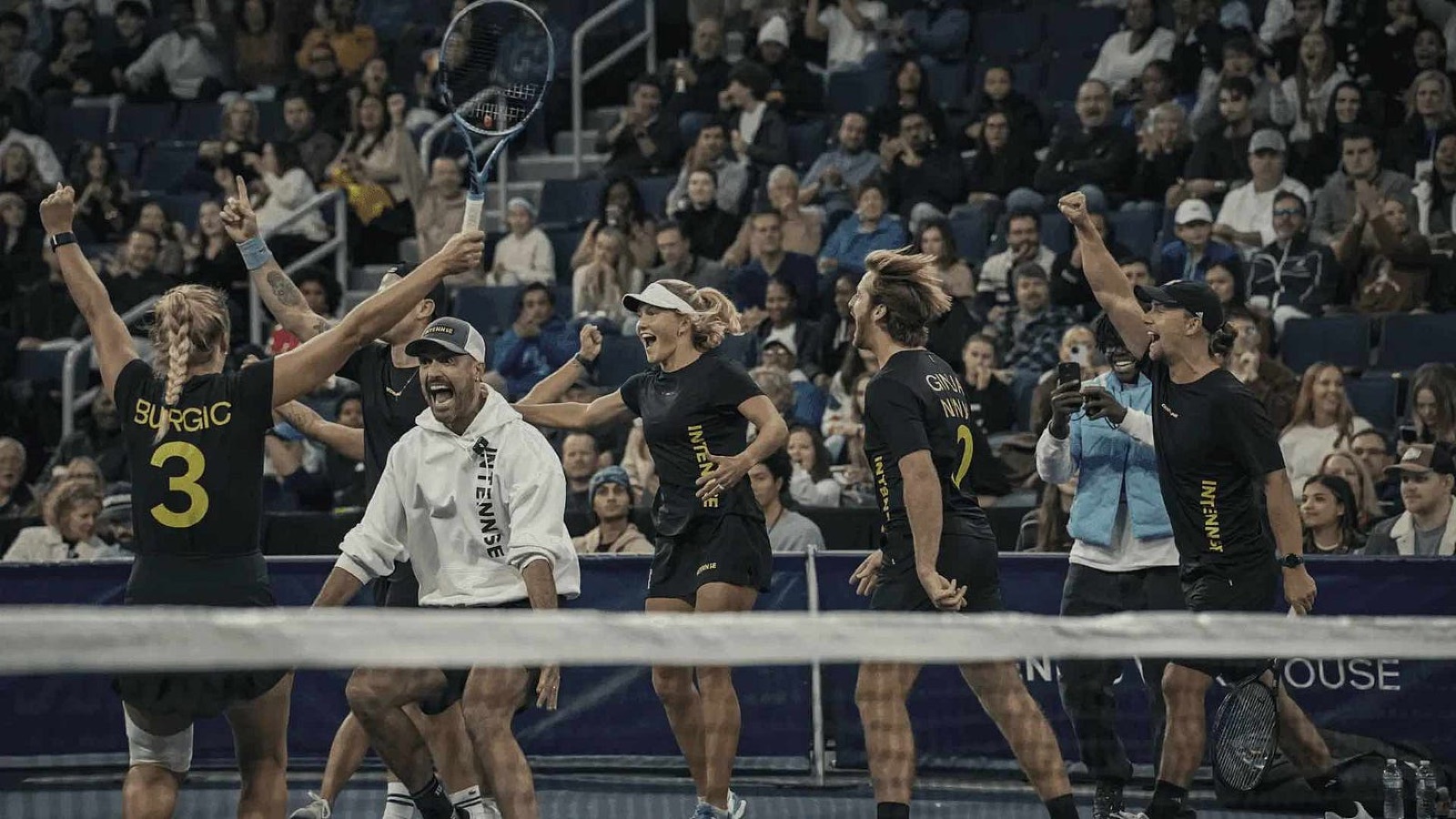
2026–27
The league operates the team and secures venues while events in the home market begin to build its audience, and the owner learns the business from inside it.
2028
The team moves home. The owner appoints a GM, takes ticketing, hospitality and venue, and inherits a community playbook proven over three years in Atlanta.
2029 on
Scale — and a share of the fees from every charter the league sells after the initial offering.
■ Where the teams are going
Ten charters. One is spoken for.
Freeze has its owners. The other nine charters, Atlanta’s among them, are for cities where tennis is already played and watched in numbers, and where no team has ever existed. Several conversations are open. None of the nine is closed.
Atlanta
Where the league lives and every playbook is written first. Altitude is Atlanta’s team, and its charter is still open.
The Southeast
Charleston, the Triangle, Tampa Bay, Miami and South Florida.
Beyond it
New York, Indianapolis, Phoenix and Houston.
Your city
If it is not named here, that is the conversation we most want to have.
What a market needs
A metro large enough to carry a roster of its own sponsors. A tennis community with clubs and a junior pathway. A college programme or several within reach, because that is where our players come from. One room with a court, a clock and seats close to it. And a June and July without a major-league team in season, which is most of the country: the NBA and NHL finish in mid-June and the NFL does not open until September.
More American cities pass that test than there are charters. The order in which they are filled is the order in which owners come forward.
■ What early looks like
The first owners in a league buy the cheapest seats it will ever sell.
That is the pattern in every emerging league that lasted. The ones that worked sold their first charters cheaply and their later ones dearly, and let the early owners share in the difference.
What we are not claiming
Not every new league lasts, and nothing about the ones that did is a promise about this one. In Major League Pickleball, teams that changed hands for around $100,000 in 2021 were valued near $10 million two years later; other ventures of the same era are gone.
The argument is only this. If team tennis becomes a real league in America, the charters sold before 2029 will have been the cheap ones. We think Season 2 is the evidence that it will.
■ The broadcast
Built for the room, and for the screen.
Every Pro Arc in 2026 was carried live. The league produces and sells the national broadcast; the owner sells the city. In 2026 that split put the league on fourteen platforms, with 60% of watch time on television, and put the best Atlanta night in 116,000 local households.
“INTENNSE content on Unbeaten delivered a size and consistency of audience we see for other primetime events at this time of year, ie baseball, which we have carried for several years.”
Unbeaten Sports Channel · INTENNSE 2026 Season Report · September 2026
What stays local
Forty Arcs aired on Peachtree TV in Atlanta, averaging 46,000 households. In a home market, that local window is the owner’s: the regional broadcaster, the local sponsor reads and the pre-game content belong to the team, within league rules. The national feed, the FAST channels and the streaming platforms are the league’s to sell, and every team is on them.
478,483 on Unbeaten, measured to 31 August 2026.
Peak of 29,582 for Sting v Rise on 6 June.
Above the FAST norm, in the platform’s own words.
Up 1,037% year on year; 26M impressions, up 406%.
■ What an owner inherits
Atlanta wrote the first-year playbook.
By midseason, attendance was more than four times the year before and had already passed the whole of 2025. Thirteen sponsors signed, twelve of them through relationships already in the city, with Atlanta-based Cellairis as Founding Partner. The average ticket sold for $52, and team merchandise outsold league merchandise. Eleven community events drew 770 people off the couch and onto a court.
What stays with the team
Local sponsorship, ticketing, hospitality and activations belong to the charter holder, not the league. The court is small and the crowd is on top of it, so in-venue signage is broadcast signage, and positions are exclusive: a partner takes the net or the backwall, not both. On the league’s roster today, banking and automotive, the two categories with the deepest history of spending on tennis, are both still open.
Those are the numbers and the inventory a local owner inherits and builds on.
■ Who you would be building with
The people behind the league.
■ Pulse Partners, by team
A Pulse Partner is an ambassador, not an owner.
■ Why we sent this
We’re looking for owners.
What we cannot show you yet: a team that has played a season in its own city. Every Arc so far has been played in Atlanta, and the first home seasons are 2028. Everything on this page is the league’s record there. The rest would be built with you.
A local group for a team that stays: people who know their city’s tennis, and want the version that doesn’t leave.
Where an hour could lead
We’ll bring the charter, the model and the transition plan, and answer every question about them. If it’s worth a second hour, we’d rather it were courtside in Atlanta than in a conference room.
The charter
Terms, territory and the path from league-operated to owner-operated, walked through in full.
The team
Which crest: one of the ten brought to your city, or one drawn for it. Its name and its colours are a conversation, not a page.
The first night
An exhibition in your city before 2028, to introduce the team to the people it will belong to.
The model
Revenue lines, breakeven and the years to cash-positive — the numbers we left off this page on purpose.